How to Putt in Disc Golf
The fundamentals in one sentence: Use a balanced stance, grip the disc firmly, aim at the center chains, release the disc flat with a smooth wrist motion, and follow through with your arm pointing directly at the basket.
Putting is the most important skill in disc golf. More strokes are lost inside 30 feet than at any other distance on the course. A player with an average drive and a reliable putt will outscore a player with a long drive and a shaky putt almost every time.
There are two primary putting styles: the spin putt and the push putt. Both work at the highest levels of professional play. The right one for you is the one that produces the most consistent results. This page covers both in detail along with stance, common mistakes, disc selection for putting, and a practical week by week practice plan.
For a deeper understanding of the rules around putting, including the Circle 1 requirement to show balance and control before releasing inside 10 meters, see the disc golf rules and scoring page.
Why Putting Is the Most Important Skill in Disc Golf
Ask any experienced disc golfer where rounds are won and lost and they will give you the same answer: inside the circle. Putting accounts for a huge proportion of the total strokes in any round, and small improvements in putting consistency have a larger effect on your score than equivalent improvements in any other part of the game.
A player who drives 350 feet but misses half their putts inside 20 feet will score worse than a player who drives 200 feet but makes nearly every putt inside 20 feet. Distance off the tee attracts attention because big throws are exciting. But putting is where rounds are actually decided, and it is the skill most beginners spend the least time developing.
The good news is that putting responds faster to deliberate practice than any other disc golf skill. Unlike the full backhand throw, which requires full-body coordination and months of repetition to develop, putting is a controlled short-range motion that improves quickly with focused sessions. Twenty minutes of deliberate putting practice three times a week produces noticeable improvement within the first month for most players.
Spin Putt vs. Push Putt — Comparison
Before diving into the mechanics of each style, here is a direct comparison to help you understand the key differences and which situations each style handles best.
| Category | Spin Putt | Push Putt |
|---|---|---|
| Spin Generated | High | Low to moderate |
| Wind Performance | Better in wind | Less stable in wind |
| Chain Impact | Harder, more bounce-outs possible | Softer, drops in more reliably |
| Best Distance | Better from 20 to 33 feet | Better from inside 20 feet |
| Beginner Friendliness | Moderate — requires good wrist timing | Higher — more intuitive motion |
| Miss Tendency | Right on anhyzer release | Left on pulled release |
| Grip | Power grip | Fan grip or modified power grip |
| Pro Usage | Very common | Very common |
The Spin Putt
The spin putt generates disc stability through rotation, similar to a full backhand throw but at shorter range and lower power. A sharp wrist snap at release puts significant rotation on the disc, which keeps it on a stable flight path through the chains. Spin putts are faster and more resistant to wind than push putts, making them the preferred style on exposed courses or in any breezy conditions.
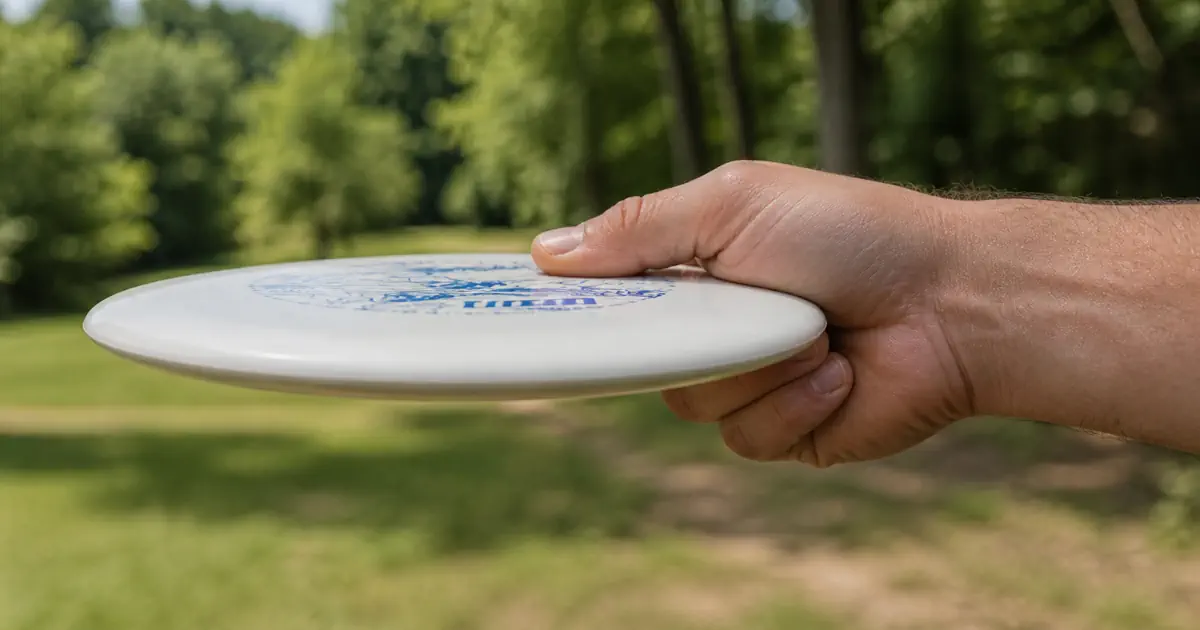
Spin Putt Grip
Use a power grip: four fingers curled tightly under the rim with the thumb pressed firmly on top. The grip should be secure but not tense. Tension kills the wrist snap that generates spin. Some players extend the index finger along the rim for additional control and aim.
Spin Putt Form Step by Step
Set Your Stance
Stand with your dominant foot forward, body facing the basket. Most of your weight starts on your back foot.
Position the Disc
Hold the disc at chest height with your elbow bent at roughly 90 degrees. Draw the disc back slightly toward your chest — this is a compact motion, not a full backhand reach back.
Drive and Snap
Drive your hand forward in a straight line toward the basket and snap your wrist sharply at the release point. Transfer weight from back foot to front foot as you push forward.
Follow Through
After release, your throwing arm should continue forward pointing directly at the basket. A complete follow through confirms you committed to the putt rather than decelerating before release.
The key to a consistent spin putt is releasing the disc on a perfectly flat plane aimed at the center of the chains. Most missed spin putts go right because of unintentional anhyzer at release. Practice in front of a wall or fence to feel what a flat release looks like.
The Push Putt
The push putt is a lower-spin, higher-arc style that relies on a forward pushing motion rather than a wrist snap. Push putts generate less spin, which means the disc arrives at the chains more softly and drops in more reliably from close range. A soft disc that hits the chains and falls straight down is more likely to stay in than a fast spinning disc that can bounce back out.
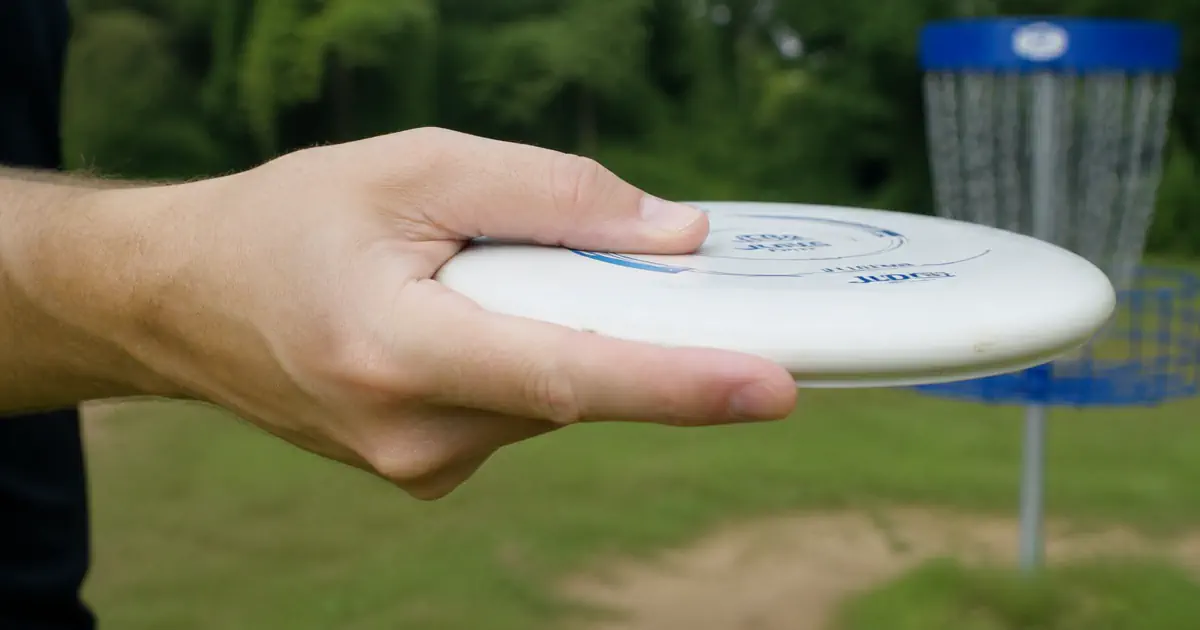
Push Putt Grip
The push putt typically uses a fan grip or modified power grip where the fingers are spread more across the underside of the disc rather than tightly curled under the rim. This allows a smoother pushing release. Experiment with grip pressure until you find what allows you to release on the same line consistently.
Push Putt Form
Stand facing the basket with your dominant foot forward. Hold the disc at chest or waist height. The motion is a straight forward push, not a throw. Extend your arm toward the basket in a straight line, releasing the disc as your arm reaches full extension. The disc travels on a higher arc than a spin putt and arrives at the chains from above rather than straight on.
A deliberate, unhurried push with a clean release produces the most consistent results. Players who rush the motion tend to release early, sending the disc left of the basket. Take your time through the pushing motion and commit fully to the follow through.
Putting Stance
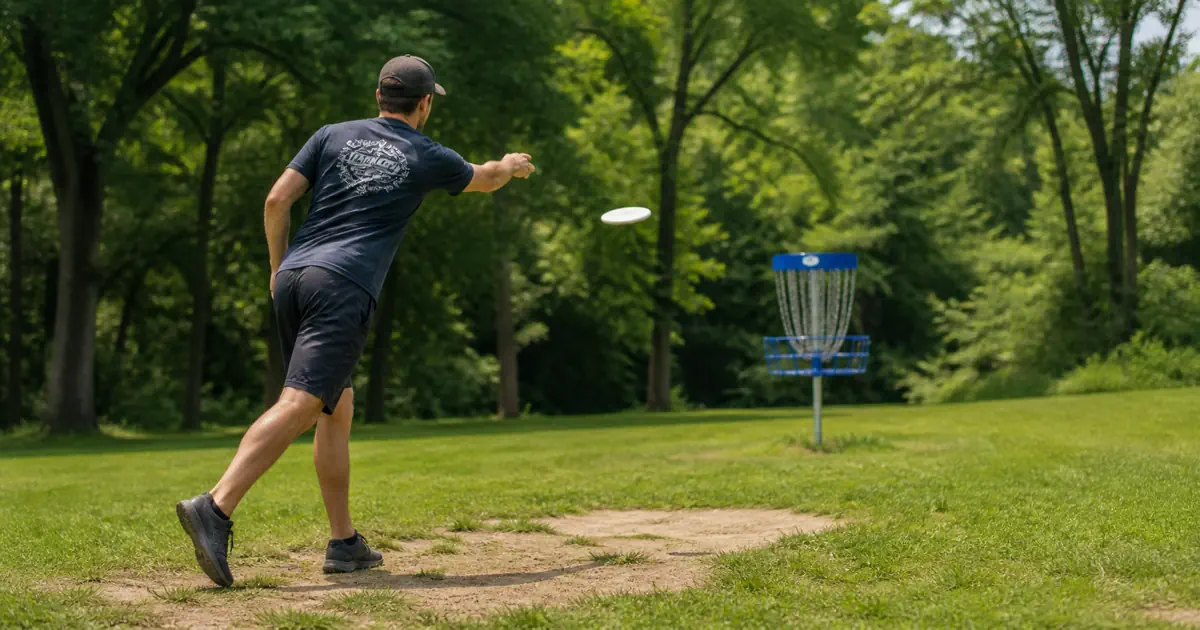
Staggered Stance
The most common putting stance. Dominant foot forward, non-dominant foot back. This stance provides a stable base, allows natural weight transfer from back to front foot, and positions your body to reach directly toward the basket through the release. Works for most putting distances and most lies.
Straddle Stance
Both feet parallel and shoulder-width apart, facing the basket directly. Useful when your lie is on a slope or in an awkward position where a staggered stance would be unstable. Also effective for very short putts inside 10 feet where power generation is not a concern and stability is the priority.
The Circle 1 Rule
In PDGA sanctioned play, any player within 10 meters (Circle 1) of the basket must demonstrate balance and control after the disc is released and before advancing toward the basket. You cannot step through or fall forward after releasing inside Circle 1. Build a balanced putting form from the start and this rule will never be an issue.
Common Putting Mistakes and Fixes
Missing Consistently Right
You are releasing with slight anhyzer. The outside edge of the disc is tilted up at release. Fix: focus on releasing the disc completely flat. Practice releasing at a wall to feel what flat looks like before you throw at a basket.
Missing Consistently Left
You are pulling the disc across your body through the release. Fix: make sure your elbow is driving straight toward the basket and that your release point is directly in front of your chest, not across your body centerline.
Falling Short
You are decelerating before the release point or releasing too early. Fix: commit to a full follow through with your arm pointing at the basket after the disc leaves your hand. The disc needs momentum to reach the chains and hold.
Bounce Outs
Your disc is hitting the chains with too much speed and spinning back out. Try a push putt from close range for a softer arrival, or aim for the lower portion of the chains where discs are more likely to fall in rather than spin out.
Missing Under Pressure
This is a mental issue, not a physical one. Fix: develop a consistent pre-putt routine and use it every single time. Same grip check, same breath, same focus point on the chains, same timing. The routine quiets the conscious mind and lets your trained motion take over.
Week by Week Putting Practice Plan
This four-week plan is designed for players who want to build a reliable putting foundation. Each week has a specific focus and a clear measurable goal. Use a dedicated putter for all practice sessions. The Dynamic Discs Judge and Innova Aviar are the most recommended beginner putters.
10-Foot Foundation
100 putts from 10 feet per session. Focus only on a flat release and a complete follow through. Track how many you make out of each set of 10.
Distance Progression
25 putts each from 10, 15, 20, and 25 feet. Track your make percentage at each distance. The goal is knowing your reliable range, not making everything from 25 feet.
Around the World
Set discs at equal distances around the basket at 15 feet and putt from each position in sequence. Forces you to adjust for angle and approach direction.
Pressure Putting
Make 5 putts in a row from 15 feet. If you miss, start over. This builds the mental consistency that translates to making putts when they count on the course.
The most underrated putting tip: Develop a pre-putt routine and do it the same way every single time. Step up to your lie, take one breath, pick your spot on the chains, and putt. Players who rush their routine under pressure almost always miss directionally. The routine creates a mental trigger that quiets overthinking and lets your trained motion take over.
Best Discs for Putting
Not all putters are the same. For beginners learning to putt, you want a neutral to slightly understable putter with a comfortable grip. Overstable putters that fade hard are more difficult to control for players still developing their release consistency.
The Dynamic Discs Judge and the Innova Aviar are two commonly recommended beginner putters. Both are neutral, fly straight, and are forgiving of small release errors. Both are available for around $12 to $15.
BWBDA field note: For new players, we consistently see faster improvement when starting at 10 to 15 feet with a push putt before introducing spin putting for wind and longer Circle 1 attempts. The push putt builds release consistency first. Once your release is repeatable, adding spin is a natural and quick progression.
For a full breakdown of putter categories and how they compare to mid-ranges and drivers, visit the disc types explained page.
Start with 100 putts from 10 feet. Track your makes. Only move back when your release stays flat and repeatable.
That is the whole putting improvement system in one sentence. Everything else on this page is context for why that works.